Adjust the sliders and copy the values below into your CSS to change the theme.
Technion – Faculty of Data and Decision Sciences
Research on efficient reasoning and intelligence: closing the gap between small and large reasoning models.
Our work centers on a fundamental question:
In recent years, progress in AI has mostly come from scaling two things together: compute and data. We throw more FLOPs at larger models, run them on increasingly large GPU clusters, and feed them ever bigger corpora of text, code, and interaction data. It works, but it comes with costs that are inaccessible to most researchers and institutions. Open-source systems like Kimi and Qwen now approach the quality of proprietary systems such as GPT-5 and Claude, but running them still assumes expensive, power-hungry multi-GPU servers that most labs, products, and devices simply cannot justify. At the same time, the models we call “small” are often still at the billion-parameter scale, trained on massive curated datasets, and they remain far weaker.
The Efficient Intelligence Lab focuses on the sufficiency frontier: how much model, data, and compute are actually needed for different kinds of reasoning, and how those resources can be traded off. The human brain runs on tens of watts—roughly a single light bulb—and learns from a limited stream of experience and reading, while typical large-model servers draw thousands of watts when active, comparable to powering several homes or fast-charging an electric car, and are trained on orders of magnitude more data than any individual will ever encounter. This discrepancy isn’t just a curiosity; it suggests a genuine opportunity for a step change in how we design and train reasoning systems. Our goal is to develop principles that let smaller models learn more from less and retain much of the reasoning power of today’s largest systems, while operating within the power, hardware, and data budgets that the real world can actually afford.
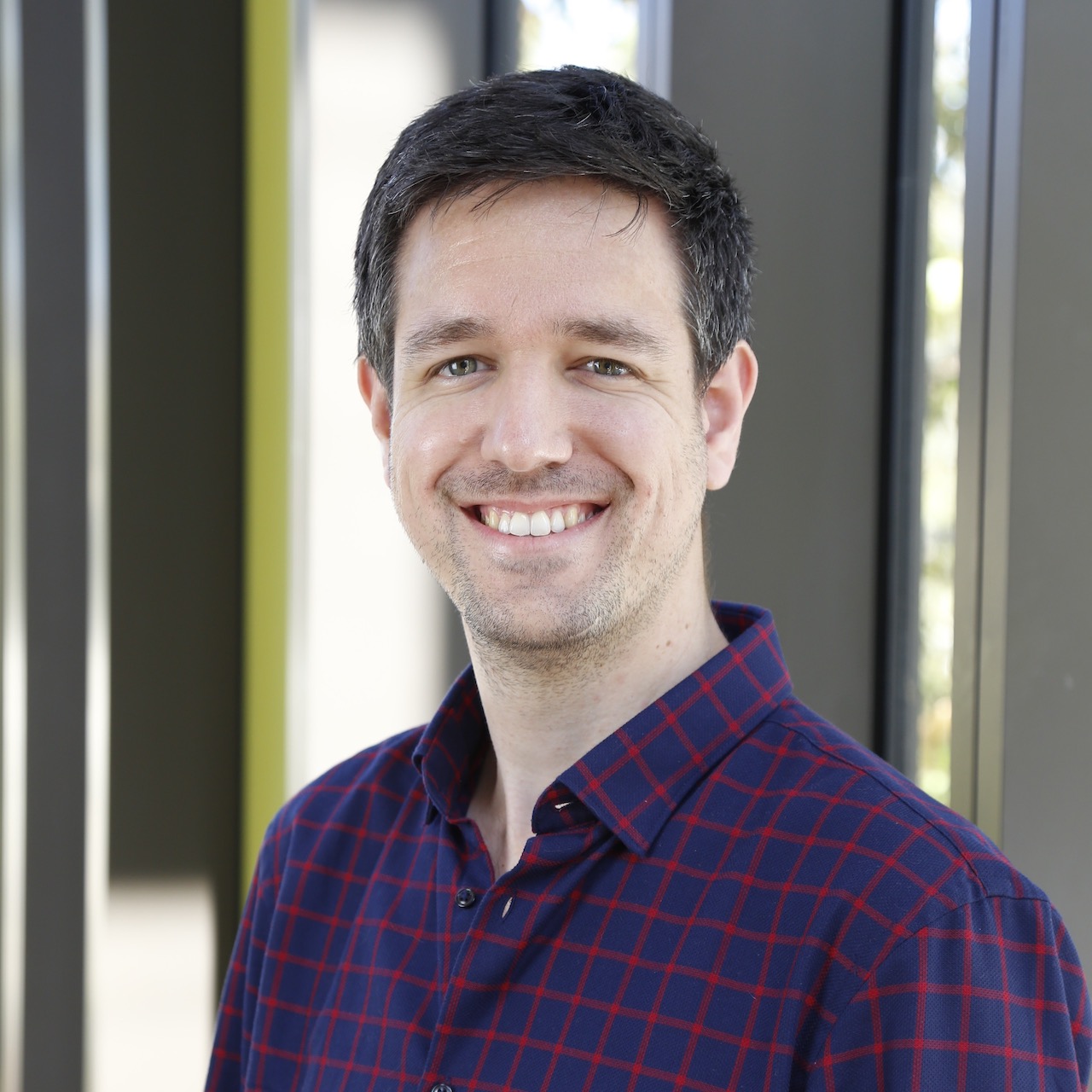
The Efficient Intelligence Lab is led by Or Sharir, a recently appointed Assistant Professor in the Technion Faculty of Data and Decision Sciences. Or has worked in both academia and industry, most recently as a co-founder of AAI.
He obtained his Ph.D. in Computer Science from the Hebrew University of Jerusalem under the supervision of Prof. Amnon Shashua, and completed a postdoc at the California Institute of Technology (Caltech), hosted by Prof. Anima Anandkumar and Prof. Garnet Chan.
Visit sharir.org →His research spans deep learning theory (including scaling laws and the expressive power of neural networks), AI-accelerated quantum many-body physics simulations, and large language models—both frontier-scale models in industry and more efficient, structured reasoning models in academia.
The lab builds on this trajectory, connecting foundational theory, scientific applications, and modern reasoning models into a unified focus on efficient intelligence.
We welcome exceptional MSc and PhD students who want to work at the intersection of theoretical insight and experimental system-building.
You are likely a good fit if you have:
The lab is based in the Technion Faculty of Data and Decision Sciences. Joining the lab requires admission to a Technion MSc/PhD track, typically within this faculty.
I’m primarily looking for students who will join the MSc/PhD programs in Data and Decision Sciences, though cross-faculty co-advising may be possible in select cases.
If you are not currently enrolled but plan to apply to these programs and are interested in the lab, you are still very welcome to reach out.
If you are interested in joining the lab, please email or.sharir@technion.ac.il with:
Or contact or.sharir@technion.ac.il with questions.